> For the complete documentation index, see [llms.txt](https://help.daasity.com/llms.txt). Markdown versions of documentation pages are available by appending `.md` to page URLs; this page is available as [Markdown](https://help.daasity.com/core-concepts/data-integrations/setup-guides/digital-integrations/fairing-v2/integration-setup.md).
# Integration Setup
## Step 1: Navigate to 'New Integration' screen
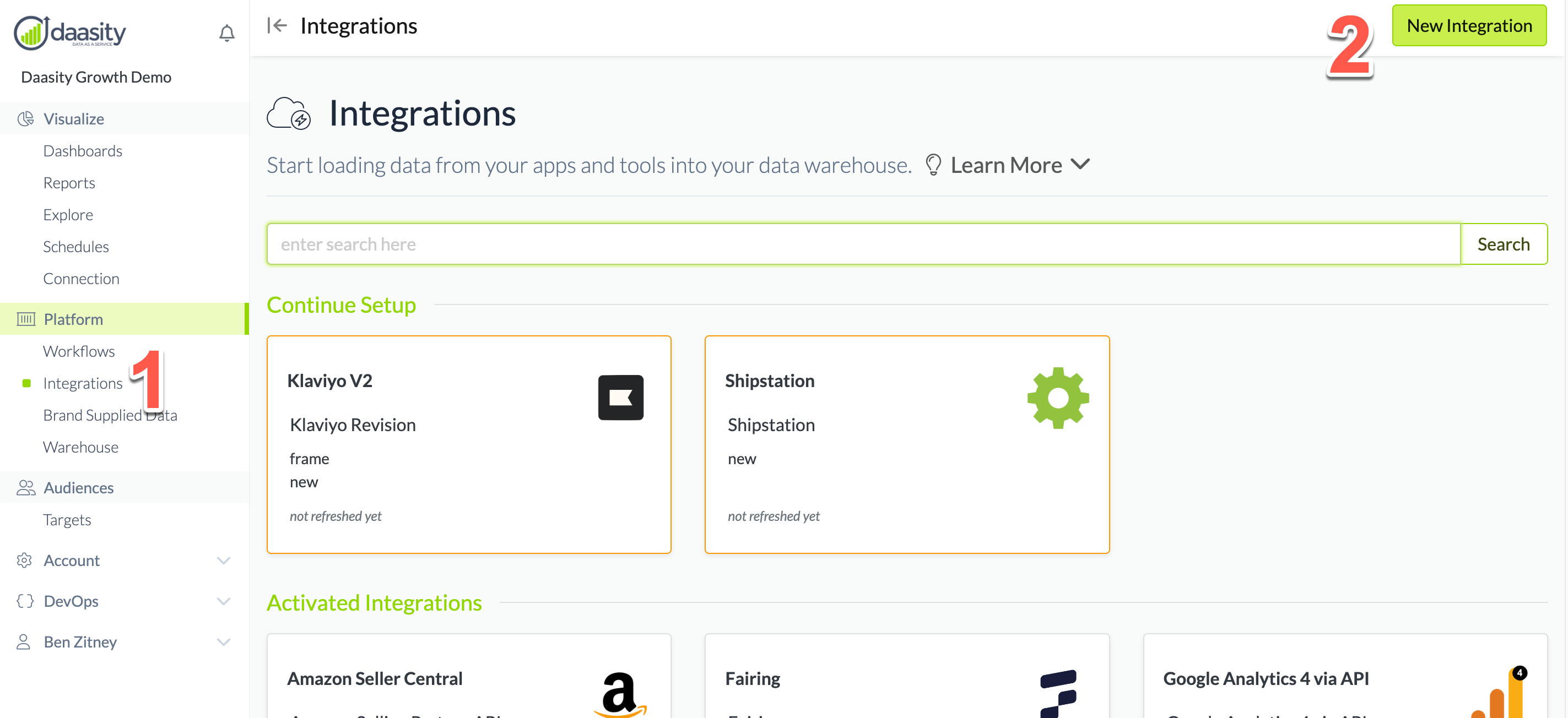
In the Daasity app, click **Integrations** in the left-hand menu, and then the **New Integration** button in the upper-right corner.
## Step 2: Choose the Fairing V2 integration
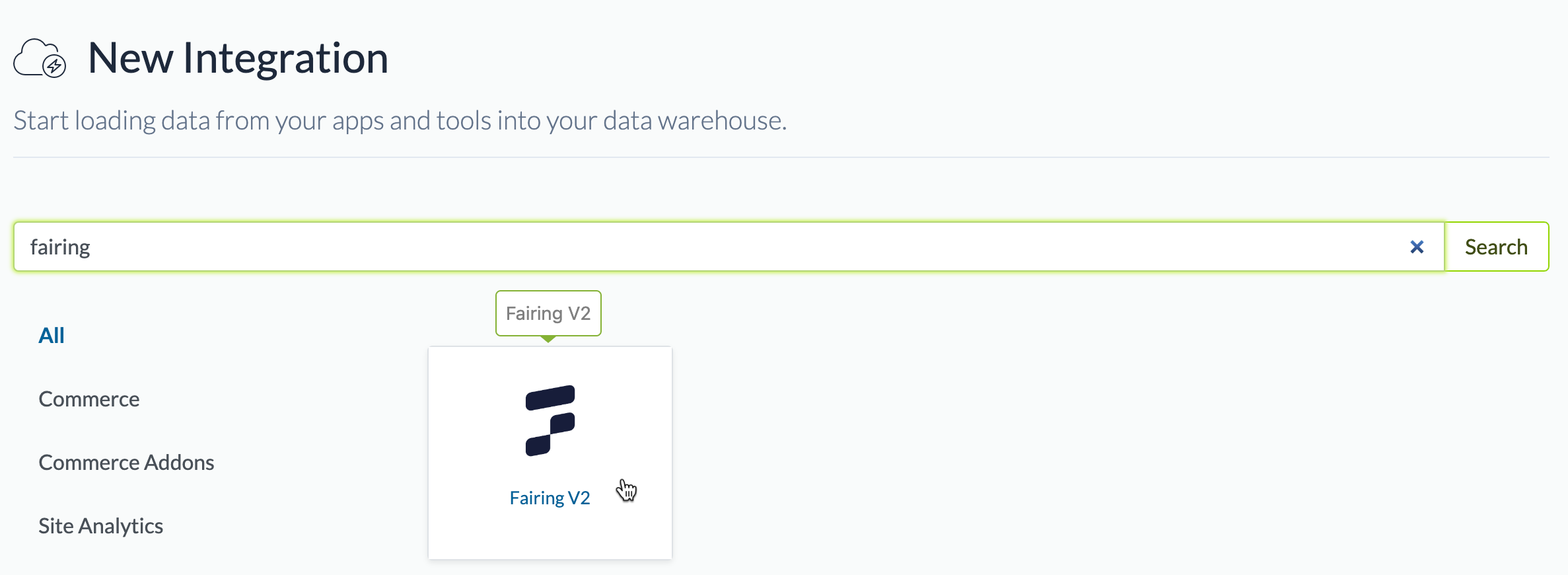
In the search box, type "fairing" and choose the Fairing V2 integration.
## Step 3: Enter integration details
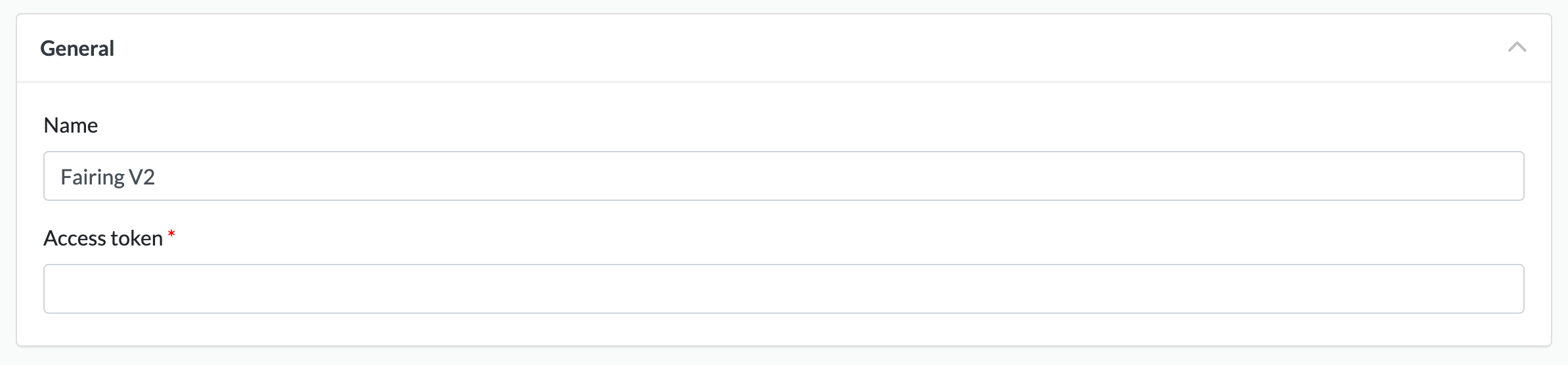
Give the integration a name. This is the name that will be displayed in your integrations list in the Daasity app.
In the **Access token** field, you should enter your Fairing API Secret Token, which you can find in the Account tab of your Fairing admin screen. [View Fairing's documentation here](https://docs.fairing.co/reference/authentication).
## Step 4: Click 'Create'
Click the **Create** button in the upper-right-hand corner to create the integration.
The integration is now set up to load data daily. If you do not load history, you won't have any new data until your next daily workflow run.
## Step 5: Load history
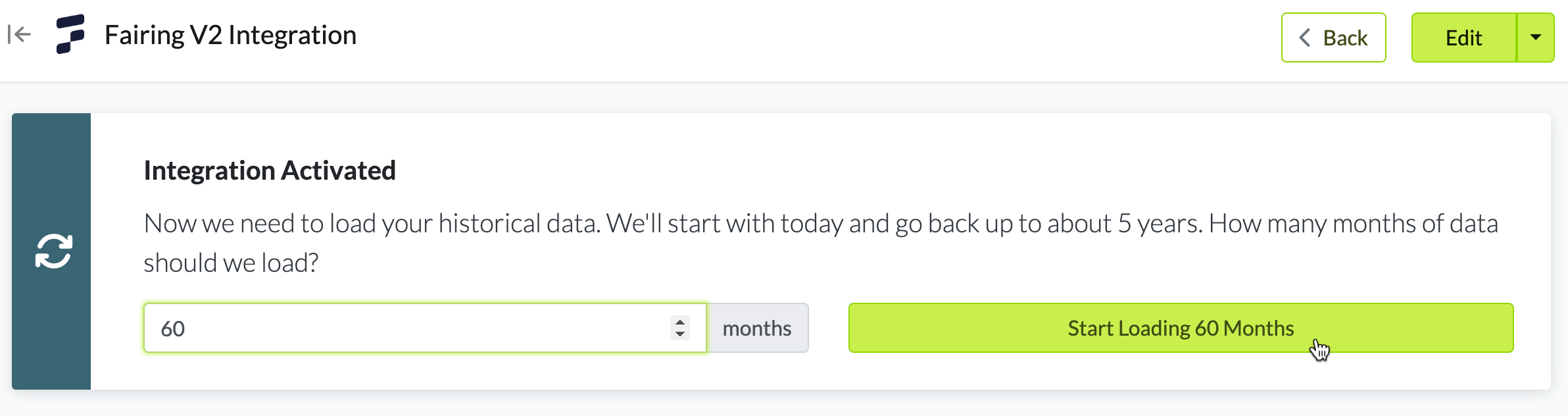
From the integration details screen, trigger a load of up to 5 years of history: