> For the complete documentation index, see [llms.txt](https://help.daasity.com/llms.txt). Markdown versions of documentation pages are available by appending `.md` to page URLs; this page is available as [Markdown](https://help.daasity.com/core-concepts/dashboards/report-library/data-source-dashboards/shipbob.md).
# ShipBob
## Overview
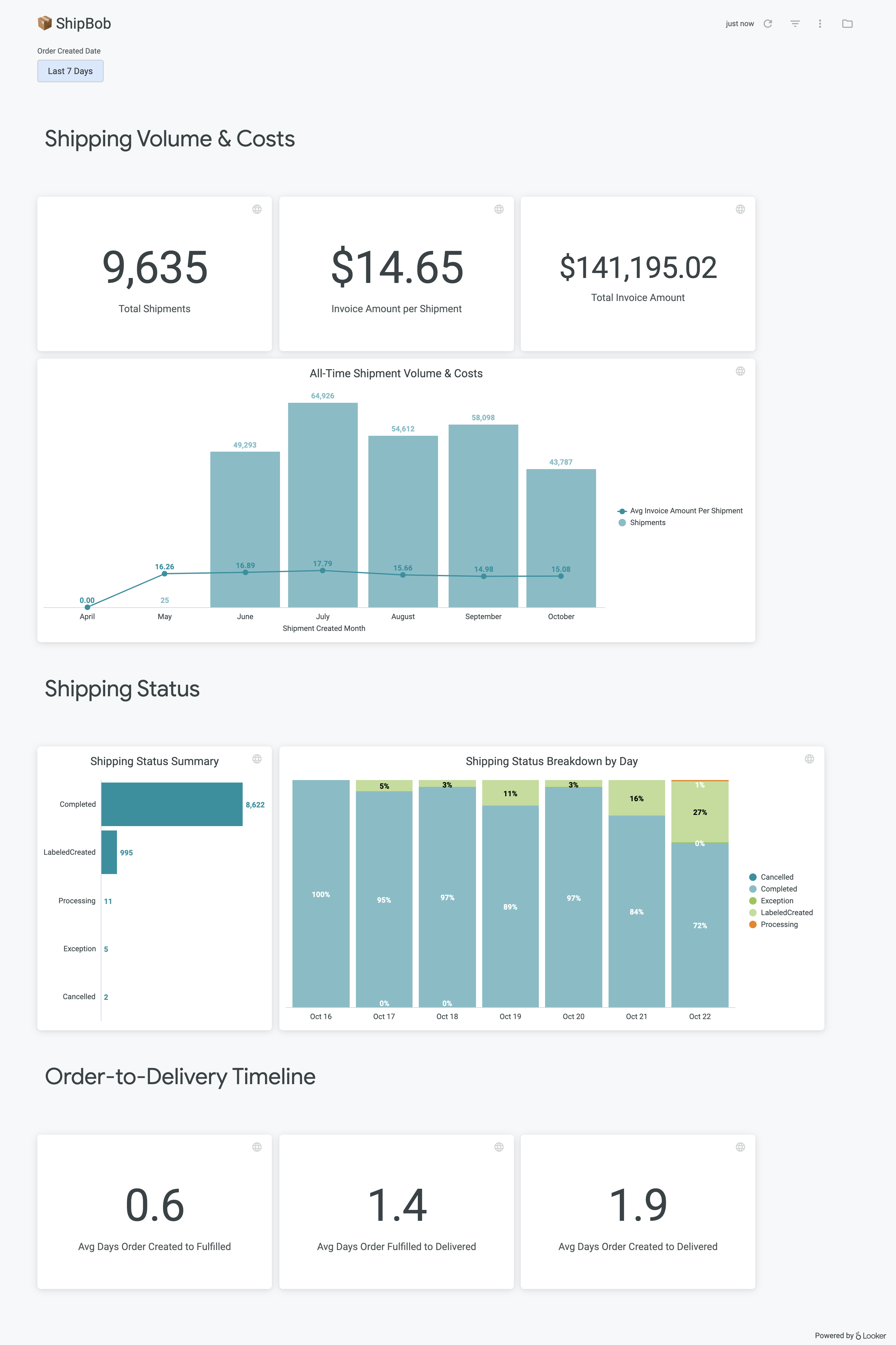
This dashboard enables you to analyze your raw ShipBob data in Daasity. You can use it to track shipping volume and costs over time and to see recent statuses of pending shipments.
## Setup
{% tabs %}
{% tab title="Enterprise accounts" %}
If you have an **Enterprise** account, please reach out to to help you set up the explore and dashboard. Or, if you have developer access in Looker, you can simply add the following line of code to your addons.lkml file:
```
include: "//base_daasity/**/integration/shipbob/*"
```
Once enabled, just search for "ShipBob" using the search bar in Looker.
{% endtab %}
{% tab title="Growth accounts" %}
If you have a **Growth** account, you just need to set up the ShipBob integration and trigger a history load. Once you do this, you will see this dashboard in your dashboard list.
{% endtab %}
{% endtabs %}
## Data sources
All of the visualizations in this dashboard use the **ShipBob** explore.
## Important things to know
### Discrepancies due to data lag
We pull the data to populate this dashboard during your nightly workflow — typically at midnight in your Daasity account's timezone. This means if there are any updates to the data between when the data is extracted and when you view the report, there will be a discrepancy between the data in Daasity and the data in your ShipBob UI.